Price:
USD 100.00 - 10000.00
Product Description
Peptides that have been hydrocarbon stapled are peptides that have been chemically braced with an all-hydrocarbon staple at a specified position to keep them in their bioactive alpha-helical shape. To address the shortcomings of two major kinds of therapeutic agents small molecules and protein biologics in focusing on intracellular protein-protein interactions, the concept of peptide stapling was developed. Small molecules only interact with proteins that have a particular surface characteristic, and the majority of protein biologics do not enter cells. Cells are easily penetrated by stapled peptides because they are locked into a stable -helical structure, which is the most prevalent component of protein secondary structures. Stapled peptides, a rapidly developing class of next-generation pharmaceuticals, are anticipated to combine the three-dimensionality and adaptable target identification capabilities of biologics with the synthetic manipulability and cell penetration of small molecules. The company you should use to manufacture your stapled peptide needs is CPC Scientific because it has extensively developed stapled peptide architectures. You are welcome to contact our technical consultants at any moment to discuss your demands for structural design.
Stapled Peptide Chemistry
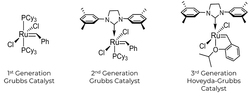
The first-generation Grubbs catalyst is a relatively stable ruthenium complex utilized for olefin metathesis in peptides. It has tricyclohexylphosphine PCy3 ligands and apical-positioned carbene carbon. The creation of a second-generation Grubbs catalyst that is more thermally stable is the result of later research middle. A third-generation catalyst, also known as the Hoveyda-Grubbs catalyst right, substitutes benzylidene ligands with chelating ortho-isopropoxy groups on the benzene ring for N-heterocyclic carbene ligands.
lone peptide reaction stapled. A single staple peptide can be produced by the Grubbs reaction when two alpha-4-n-pentenylalanine S5 residues are incorporated into a peptide strand. This process is known as ring-closure metathesis. The staple type is referred to as an i, i 4 when n 3 i.e., when there are 3 amino acids between the S5 residues.
In order to insert hydrocarbon building blocks into peptides during olefin metathesis, Grubbs catalysts are frequently utilized. The development of macro-cyclic bridges conformational constraint and,-di-substitution helix nucleation by -methylation are two different conformational techniques that are used to generate and stabilize a -helical shape.
Phillips and coworkers created the sequence Ac-His-S5-Ile-Leu-His-S5-Leu-Leu-Gln-Asp-Ser-NH2 olefin bond between S5 and S5 in a stapled peptide made by CPC Scientific, where S5 is alpha-4-n-pentenylalanine before olefin metathesis figure 2. When the peptide is completely protected and linked to the resin as Ac-HisTrt-S5-Ile-Leu-HisTrt-S5-Leu-Leu-GlnTrt-AspotBu-SertBu-Rink Amide, the Grubbs reaction is carried out. MBHA Resin. The peptide resin was mixed with 20 mL of a bistricyclohexylphosphinebenzylidine ruthenium IV dichloride 1 mg/mL solution in DCE. The reaction took place for two hours at 50 °C. In this illustration, the peptide is bound to the resin as the stapling process also known as Grubbs Metathesis is being carried out. In the image, two distinct kinds of hydrocarbon staples are used to illustrate how a stabilized -helix can be formed in a peptide. I and i 4 and i, i 7 would correspond to roughly one and two revolutions of the helix, respectively. Please consult the Cahn-Ingold-Prelog priority guidelines for naming stereoisomers for details on the R/S descriptors depicted in the picture.
A double hydrocarbon stapled peptides was created to mimic the binding domain of the human angiotensin-converting enzyme 2 ACE2 receptor for SARS-CoV-2 in a collaboration between the Laboratory of Molecular Modeling Drug Design, Lindsley F. Kimball Research Institute, New York Blood Center, and CPC Scientific. To cover the 30-amino-acid long binding domain of ACE2, a double staple motif of i 7 and i 4 was necessary.
Single Staple Configurations
Grubb’s ring-closure metathesis may result in two types of stapled peptides, i, i 4 and i, i 7.
Stapled Peptides in Drug Design
High amounts of -helical content are conferred by the addition of a hydrocarbon staple, which causes:
A higher target affinity of 5 to 5,000 times
Cell penetration by endocytic vesicle trafficking and increased proteolytic resistance
selecting extracellular or intracellular proteins as a target
protein-protein interactions being hampered
Non-immunogenicity
Pharmacokinetics that work and in vivo stability
Protein Targets
Targeting of many proteins involved in diseases like cancer, diabetes, HIV, and atherosclerosis has been researched using stapled peptides. Among these proteins are:
B-cell lymphoma 2 Bcl-2
B-cell lymphoma-extra large Bcl-xL
Bcl-2-associated X protein Bax