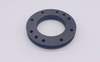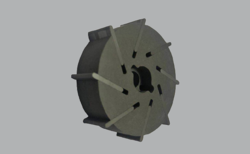
Graphite Rotor
Price:
USD 5.00 - 100.00
Minimum Order:
200 Pieces
Supply Availability:
15000 Pieces per Month
Contact Supplier:

Supplier Details
Huixian Zhongtai Abrasives Mould Manufacturing Co. , Ltd.
Free Member (2022)
[ Huixian, HE,China ]
Supplier has 5 products
Quick Details
Origin City:
Huixian
Origin Country:
China
Packaging and Delivery
Packaging:
Kraft paper packaging, wooden box, plastic steel belt packaging
Delivery Lead Time:
20 days
Product Description
Carbon graphite rotor is composed of rotor rods and nozzles. The transmission system drives the graphite rotor to rotate, and argon or nitrogen is blown into the aluminum melt through the rotor rod and nozzle. The high-speed rotating graphite rotor turns the argon or nitrogen entering the aluminum melt. Many small bubbles are scattered to disperse in the molten metal. At the same time, the rotating rotor also promotes the diffusion of hydrogen and inclusions in the aluminum melt to make them contact with bubbles. Bubbles absorb hydrogen in the melt based on the principle of gas partial pressure difference and surface adsorption. Hydrogen in the melt is collected, oxidized slag is adsorbed, and brought out of the melt surface with the rise of bubbles so that the melt can be purified.
Advantages of Graphite Rotor
01
Carbon graphite rotor has good absorption.
02
Carbon graphite rotor has good thermal conductivity, fast heat transfer, uniform heating, and fuel-saving.
03
Carbon graphite rotor has chemical stability and corrosion resistance.
04
Carbon graphite rotor has a strong anti-oxidation and reduction effect.
05
Environmental protection and health, no radioactive pollution, high-temperature resistance.
Working Principle of Graphite Rotor
The graphite rotor is composed of a rotor rod and nozzle. The transmission system drives the graphite rotor to rotate, and Ya gas or nitrogen is blown into the aluminum melt through the rotor rod and nozzle. The high-speed rotating graphite rotor disperses the Ya gas or nitrogen entering the aluminum melt to form many small bubbles, which are dispersed in the molten metal. At the same time, the rotating rotor also promotes the diffusion of hydrogen and inclusions in the aluminum melt. What is the purpose of the graphite degassing rod to make it contact with the bubbles The bubbles absorb the hydrogen in the melt according to the principle of gas differential pressure and surface adsorption, The oxidized slag inclusion is absorbed and brought out of the melt surface with the rise of bubbles so that the melt can be purified.
Application of Graphite Rotor
Graphite rotor has excellent characteristics such as conductivity, thermal conductivity, lubricity, chemical stability, plasticity, and thermal shock resistance, so it is used in the following aspects:
as refractory
as conductive material
as lubricating material
making heat exchanger, reaction tank, condenser, combustion tower, absorption tower, cooler, heater, filter, and pump equipment
as casting, sand turning, die pressing, and high-temperature metallurgical materials
as deceleration material in atomic reactor
adding a certain amount of carbon graphite powder into the water to prevent boiler scaling
as pencil lead, pigment, and polishing agent
If you want to know more types of graphite and carbon products, please visit our website.
We also have types of graphite plate for sale, if you have needs, please contact us.
Basic Information
Country:
China
Year Established:
2015
Total Employees:
51 - 100
About Us
Our Company is located in Xinxiang Taihang Mountains, Henan Province, is located in the Yujin border area, covers an area of 6500 square meters, is a set design, production and sales of graphite mold manufacturing enterprises. The main products are: 1, a variety of high-purity graphite mold, graphite ring, Drum, strip, graphite crucible, graphite plate, graphite precision instruments. 2. Diamond Products Mould, drill bit mould, Roller Mould, grinding wheel, crucible and various shaped mould. Our products are widely used in mechanical and chemical, mold, petroleum, textile, mechanical and electrical, diamond sintering mold and other fields.
Member History
Year Joined:
2022
Membership Type:
Free Member
Send Supplier a Message
You must be signed in to contact this supplier.