Saifu Capacitor Film and Capacitor Wholesale
Price:
USD 1.00 - 10.00
Payment Terms:
T/T
Contact Supplier:

Supplier Details
Anhui Safe Electronics Co.,Ltd.
Free Member (2023)
[ Tongling, AN,China ]
Business Type: Manufacturer
Supplier has 5 products
Quick Details
Brand:
Saifu
Origin City:
Tongling
Origin Country:
China
Product Description
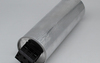
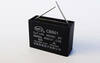
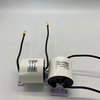
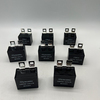
Custom and OEM Capacitor with High Quality
The metallized polypropylene film capacitor produced by Anhui Saifu Electronics Co., Ltd. is a capacitor formed by winding polypropylene film as the dielectric and the zinc-aluminum metallized layer by physical vapor deposition as the conductive plates. This capacitor for sale has the characteristics of non-polarity, stable capacitance, small loss tangent, small ESR and ESL, reasonable size, and self-healing.This capacitor wholesale can be used in AC and DC occasions in industrial and civil fields, such as DC -Link, DC filter, DC pulse, AC motor, household appliances, low voltage compensation, AC filter, lamps, etc.
Capacitor Working Principle
A bulk capacitor consists of two conductive plates separated by a dielectric. The opposing surfaces of the two conductive plates can hold equal and opposite charges and create an electric field. The dielectric of Saifu's capacitors is polypropylene film, and the conductive plate is metallized layers zinc-aluminum or pure aluminum layers by physical vapor deposition vacuum evaporation. For ease of use, two or more layers of metallized film with lengths of several meters to thousands of meters are wound into capacitor elements. Saifu's capacitors are composed of single to hundreds of capacitor elements according to capacitor specifications.
Multilayer Ceramic Capacitor Manufacturing Process
The manufacturing process of multilayer ceramic capacitors MLCCs generally involves the following steps:
Mixing: The raw materials, which typically include ceramic powders, metal oxides, and binders, are mixed together in a ball mill to form a homogeneous slurry.
Forming: The slurry is then poured into a mold or cast onto a tape, which is then cut into individual chips of the desired size and shape.
Drying: The formed chips are dried in a drying oven to remove any remaining moisture from the slurry.
Firing: The dried chips are then fired in a high-temperature furnace to sinter the ceramic and metal oxide powders into a solid, crystalline structure. This process also burns off the organic binders, leaving behind a pure ceramic material.
Electrode deposition: Once the chips have been fired, metal electrodes are deposited onto the ceramic surface using a variety of techniques, such as screen printing or sputtering.
Stacking: The chips are then stacked on top of each other, with each layer separated by a thin layer of insulating material, typically made of ceramic or glass.
Terminations: The final step is to add terminations to the ends of the stacked chips, which allow the capacitor to be connected to a circuit. The terminations can be added using a variety of techniques, such as plating or wire bonding.
After the terminations are added, the multi layer ceramic capacitors are tested to ensure that they meet the required electrical specifications. This may involve measuring parameters such as capacitance, voltage rating, and dielectric constant. Once the multilayer capacitors pass the quality control tests, they are packaged and shipped to customers.
Capacitor Design
Capacitor design involves several considerations to ensure that the custom capacitor meets the required specifications for a given application. Here are some of the key design considerations for capacitors:
Capacitance: The capacitance is the most fundamental capacitor parameter for a capacitor, and it determines the amount of charge that the capacitor can store for a given voltage. Capacitance is determined by the physical dimensions of the capacitor, the dielectric material, and the electrode material.
Voltage Rating: The voltage rating specifies the maximum voltage that a capacitor can withstand without breaking down. The voltage rating is determined by the dielectric strength of the material used in the capacitor, as well as the thickness of the dielectric layer.
Size and Shape: The size and shape of the capacitor can have a significant impact on its performance and suitability for a given application. For example, surface mount capacitors are designed to be mounted directly onto printed circuit boards, while axial lead capacitors are designed to be inserted into through-hole mounting.
Temperature Coefficient: The temperature coefficient of a capacitor describes how the capacitance changes with temperature. This is an important consideration for applications where the temperature may vary significantly, as the capacitance can drift and affect the performance of the circuit.
ESR and ESL: Equivalent series resistance ESR and equivalent series inductance ESL are parasitic effects that can occur in capacitors, which can affect the performance of the capacitor in high-frequency applications. It is important to choose a capacitor with low ESR and ESL for high-frequency applications.
Basic Information
Country:
China
Business Type:
Manufacturer
Year Established:
2007
Total Employees:
51 - 100
About Us
Anhui Safe Electronics Co.,Ltd. has 6 large-scale high vacuum coating equipment, 20 intellectualized slitting machines, 10 automatic winding machines, vacuum oil processing system, DC high voltage test equipment, AC test equipment and other professional equipment, and has established a world-class production line for capacitor grade metallised film and film capacitors. Our products have obtained CQC, TUV, UL, CE and other relevant certifications, in compliance with RoHS and REACH directive requirements.The company has a powerful RD team led by senior engineers and Doctors. It has a number of patents and software copyrights in metallized film for capacitors, film capacitors and related fields, including 45 authorized invention patents. The continuous research, development and innovation of the company team ensures that the enterprise is leading and advanced in the industry.
Member History
Year Joined:
2023
Membership Type:
Free Member
Send Supplier a Message
You must be signed in to contact this supplier.