Product Description
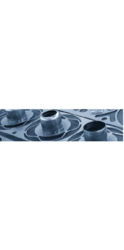
Bushing in China, a high-quality mechanical component expertly designed to reduce friction, wear, and vibration. Crafted from robust, long-lasting materials, this versatile bushing offers exceptional performance in a wide range of applications. Enhance the efficiency and lifespan of your equipment with this dependable, precision-engineered solution.
Quality Control of Bushings/Sleeves
Material Inspection: The quality control process begins with the inspection of incoming raw materials. The materials used for bushings/sleeves should meet specified standards and requirements. Material testing methods may include chemical composition analysis, hardness testing, and dimensional verification.
Dimensional Accuracy: Bushings/sleeves must have precise dimensions to ensure proper fit and functionality. Quality control measures involve dimensional inspections using calibrated tools and equipment, such as calipers, micrometers, and gauges, to verify inner and outer diameters, length, and wall thickness.
Surface Quality: The surface finish of bushings/sleeves is critical for smooth operation and reduced friction. Quality control checks involve visually inspecting the surfaces for defects such as burrs, scratches, or irregularities. Surface roughness measurements may also be performed using tools like profilometers.
Tolerance Verification: Bushings/sleeves have specific tolerances that define acceptable variations in dimensions. Quality control procedures involve checking the manufactured components against these tolerances to ensure they fall within the specified limits.
Mechanical Properties: Depending on the application requirements, certain mechanical properties of bushings/sleeves, such as hardness, tensile strength, and elongation, need to be assessed. These properties can be evaluated through standardized testing methods, including hardness testing e.g., Rockwell or Brinell and tensile testing.
Specification of Bushing
Material Iron, stainless steel, brass, copper, galvanized steel, titanium, Aluminium, etc.
Surface treatment Zinc/Nickel/Tin/Ag-Plated/Au-Plated, etc.
Type High-Precision nonstandard parts
OEM Service
Process Stamping/Punching/Pressing, CNC machining/Turning/Milling, Deep Drawing and other process.
Certificate IATF16949 2016;I SO9001 2015; ISO14001:2015;RoHSREACH, etc.
Usage Automotive/ Car Thermostat, Switch, Electric Heating, Aerospace, New energy, etc.
Product Features of Bushings/Sleeves
Bushings, also known as sleeves, are cylindrical components used in various applications to provide support, reduce friction, and absorb shocks or vibrations. The specific product features of bushings/sleeves can vary depending on the intended use and the materials they are made from.
Wear Resistance: Bushings/sleeves may have specific features to enhance their wear resistance, especially in high-load or high-speed applications. These features can include special surface coatings, heat treatment, or the use of materials with inherent wear-resistant properties.
Dampening and Shock Absorption: Some bushings/sleeves are designed to absorb shocks or vibrations, reducing the transmission of impact forces. They may have properties like high elasticity, flexibility, or the ability to deform under load, providing damping characteristics.
Corrosion Resistance: Depending on the application and operating environment, bushings/sleeves may require corrosion-resistant properties. This is particularly important when exposed to moisture, chemicals, or extreme temperatures. Choosing the appropriate material or applying protective coatings can enhance the corrosion resistance of bushings.
Application-Specific Features: Some bushings/sleeves may have additional features specific to certain applications. For example, flanged bushings have a built-in flange that provides additional stability or mounting points.
When selecting bushings/sleeves, consider the specific requirements of your application, such as load capacity, speed, operating conditions, and environmental factors. Understanding the product features and their suitability for your intended use will help ensure optimal performance and longevity.
Difference between Bushings and Bearings
Bushings are simple cylindrical components designed to reduce friction between a shaft and external structures, providing support and guidance. Commonly found in furniture, automotive suspension systems, etc., they are designed for simplicity and can be solid or feature built-in lubrication grooves to decrease friction and enhance durability.
Bearings, on the other hand, are more complex mechanical components with rolling elements such as balls or rollers. They reduce friction, offer greater load-bearing capacity, and provide high-precision support. Widely used in engines, motors, wheel axles, etc., bearings come in various designs to meet the demands of high-speed and high-load applications. As a high precision parts supplier, HHC are