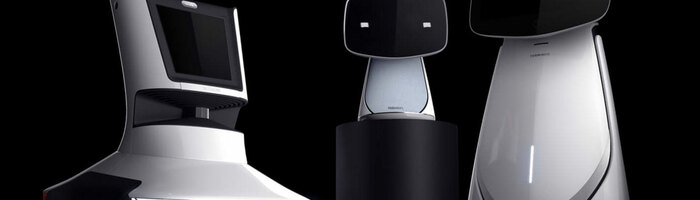
Price:
USD 100.00 - 1000.00
Product Description
Cities often represent growth in mankind’s collective wisdom. The goal of every great city is to be built with the highest quality resources available and make use of the newest and most innovative technologies.
In the ancient city of Rome in the 1st century AD, the use of early hydro technologies allowed the population to flourish. Hydro power was one of the most widely used examples, generating mechanical energy through massive waterwheels. Furthermore, a highly developed water supply and drainage system provided ample clean water every day. They would collect the water and store it in large reservoirs by redirecting subsurface water from nearby rivers and lakes into artificial channels called ‘aqueducts’. This system was so effective that their water supply actually exceeded population demand. It was able to support households, gardening, water shows, mill grinding and the great Roman fountains we still see in use today. The Romans could even use the waterways as escape routes or in complex military strategies.
These innovations were magnificent. They laid the foundation for the incredibly rich, vibrant cities we live in today. Over 2,000 years later, our idea of innovation has shifted. Instead of aqueducts, we are working with the invisible networks of 5G, big data, Internet of Things IoT and artificial intelligence AI.
Let’s set the stage. Morning sunbeams stretch slowly over a city silhouette, as the light reaches out into every corner of this X-Tech city. The residential roads are bordered by lush greenery as dewdrops slide from the highest tree leaves down onto solar panel laden rooftops, then to their final resting place in the grass. There is a heartbeat - not just within the surrounding nature - but witihin the structures themselves. As the dewdrops fall, the solar panels adjust themselves, ever so slightly, so water can slide into the gutters and reach the plants below. As sunlight hits the houses, bedroom windows adjust their opacity to allow the natural light to wake sleepy residents. Once light has filled the room, an AI virtual housekeeper selects your breakfast, matches your outfit with the weather, and presents a full schedule of your day. After breakfast, you step into your intelligent, fully-automated vehicle, and begin your intercity commute cities browsing global market news - recommended by an algorithm, of course!
This is not some SciFi pipedream, but a glance at the plans for an upcoming AI CITY. As early as 1992, Singapore proposed an plan known as the Intelligent Island in an attempt to create a country powered by artificial intelligence and machine learning. Subsequently, the Korean government proposed the U-Korea strategy in 2004, hoping to use the Internet and wireless sensors to transform Korea into a smart society.
In 2008, IBM first proposed the Smarter Planet” initiative, and then formally rolled out the concept of Smarter Cities in 2010. Since then, there has been momentum toward creating smart cities around the world.
In 2013, the Ministry of Industry and Information Technology of China led the establishment of the China Smart City Industry Alliance and planned to invest RMB 500 billion in the next few years to build smart cities. In 2015, the US government proposed a new smart city initiative to actively deploy smart grids, smart transportation and broadband.
Cities are effectively giant machines that must run 24/7. People need this machine in excellent working order every day to protect and transport people and resources for different purposes – big and small. These tasks range from keeping public order to repairing broken manhole covers. Smart cities seek to connect all these details of city life to the Internet and Cloud, applying IoT, AI, 5G, big data and other new ICT technologies to optimize operational efficiency of these giant machines.
The top AI cities is the next generation smart cities, and its scope is more sophisticated than merely connecting devices. The key innovation lies in the role of artificial intelligence in its infrastructure, which will allow devices to operate on their own. This will ultimately allow the city to better manage its people and resources.
Europe and the United States had an early start in the development of smart cities. In London, investments in smart city infrastructure such as the Internet of Things, big data, cloud computing, artificial intelligence and blockchain have reached GBP 1.3 trillion. These investments were largely used in building smart grids, smart streets, smart transportation and other municipal projects. As an example, let’s look at London’s West End. Using GIS, CAD and 3D virtual technology, the area has been transformed into a hub of data generating buildings. Around 45,000 buildings within an area of nearly 20 sq.km are now utilizing internet-connected, data-generating devices in the West End. It’s a prime example of an urban geo-information system offering optimized looks into lan