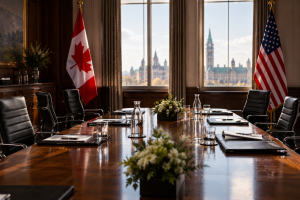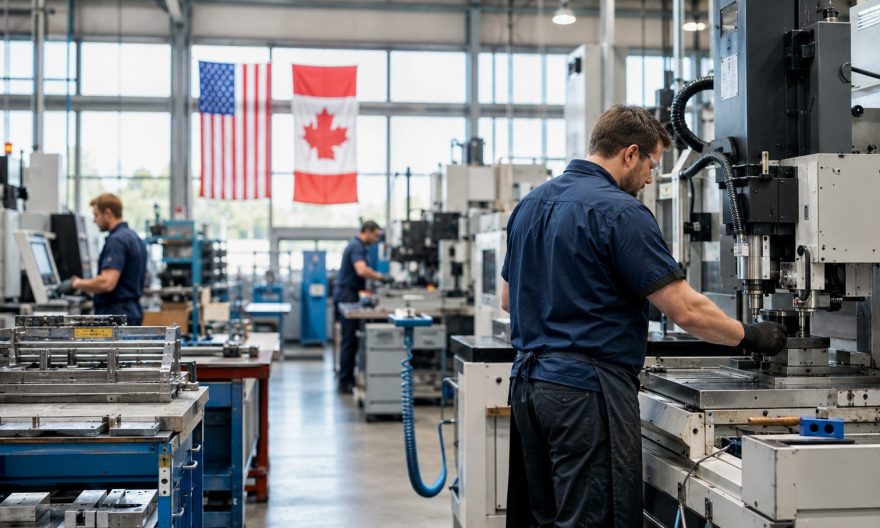
Six days ago, sitting in the Oval Office, President Trump told reporters he is “not looking to renew” CUSMA when it comes up for review on July 1. His own trade officials are actively negotiating a renewal at the same time. Both things are true simultaneously, and that contradiction is exactly the kind of uncertainty that manufacturers and procurement teams cannot afford to ignore right now.
The July 1 review is 15 days away. Whatever comes out of it will shape the cost structure of North American manufacturing for the next several years. Here is what the situation actually looks like from the ground level.
What Trump Said and What It Actually Means
Trump’s “not looking to renew” comment needs to be read carefully. CBC News reported on June 11 that experts believe Trump is unlikely to actually withdraw from CUSMA, for a straightforward reason: doing so would require 6 months notice, create enormous legal and economic disruption, and undermine the manufacturing investment commitments the administration has been celebrating. The threat is real as leverage. The follow-through is a different calculation entirely.
What is more likely, according to trade analysts, is a review that extends annually rather than the full 16-year renewal that Canada and Mexico are both seeking. That outcome keeps pressure on both countries to keep making concessions without the finality of a signed extension. For manufacturers, annual reviews mean annual uncertainty, which is its own kind of cost.
The Rules of Origin Question Is the One That Matters Most
For manufacturers sourcing components and materials across North America, the specific CUSMA provision that carries the most risk is rules of origin. The U.S. has signaled it wants tighter North American content requirements across multiple sectors, including automotive, steel, aluminum, and textiles. If those thresholds move, products that currently qualify for duty-free treatment under CUSMA could lose that status.
USTR Greer said publicly last week that Canada’s retaliatory tariffs are “a problem” for negotiations. Canada has said it will not remove those tariffs without getting something meaningful in return. That standoff is the current state of play, and it will not be resolved before July 1. What July 1 actually begins is a negotiating process, not an ending. The uncertainty does not lift on that date. It formalizes.
What Manufacturers Should Be Doing Right Now
The manufacturers navigating this best are doing three things. They are mapping exactly which of their products depend on CUSMA duty-free status, so they know where their exposure is if rules of origin tighten. They are identifying alternative suppliers in geographies outside the CUSMA framework, particularly in Asia and Latin America, so they have options already qualified when they need them. And they are building relationships with those suppliers now, through verified platforms like Manufacturer.com, rather than scrambling to find them after a policy change forces their hand.
The manufacturers who treat the next 90 days as a window to build supply chain resilience will be significantly better positioned than those who wait for the outcome of the review before making any moves. By the time the outcome is clear, the best supplier relationships will already be spoken for.
Connect with verified manufacturers across North America and 100 plus countries at Manufacturer.com and build the supply chain flexibility your operation needs before July 1 changes the conversation.